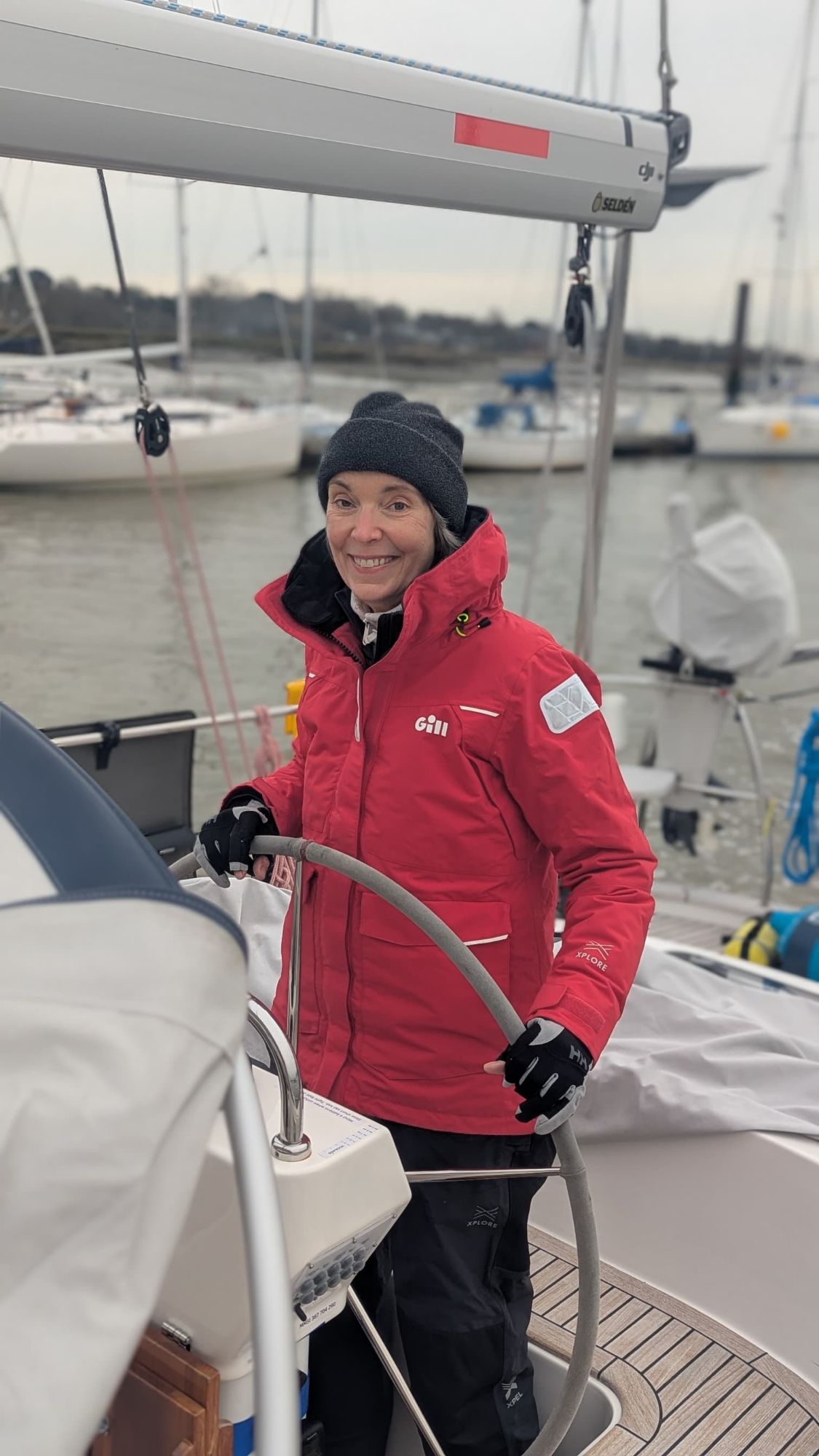
We’ve been hanging out in Portsmouth for the past week and have been enjoying it. Flight is birthed in Gosport Marina which is just across the harbor from the Portsmouth waterfront and naval base. In fact, the HMS Queen Elizabeth, the Royal Navy’s aircraft carrier was in port and we got to see her leave the harbor earlier today.
We have really enjoyed touring the Portsmouth Historic Dockyards which is a large complex of ships and museums. We saw the HMS Victory when we were here in February. The Victory fought in the Battle of Trafalgar in 1805 and has a commerative brass plaque on the deck indicating where Admiral Horatio Nelson was standing when he was shot by a French sniper.
The HMS Warrior is also here and was launched in 1860. The Warrior was the Royal Navy’s first ironclad battleship. The interpreters were fascinating to talk with as they are in period dress and assume the roles of the ship’s crew. The Warrior was powered by both sail and steam. We talked with a stoker who was in charge of feeding coal into the furnaces that powered the boilers. He said his job was a devil’s bargain in that his expected lifespan was about 45 years due to the heat, smoke, and physical demands of his job. He made a good wage and was able to feed and educate his family, but he would never get to see his children grow up. At least his widow would receive his pension.
One of the most interesting exhibits was of the wreck of the Mary Rose. She was launched in 1511 just two years after Henry VIII assumed the throne, sailed for 34 years and sank in the Solent just off of Portsmouth in 1545 during a battle with the French. Her wreck was found in 1971 resting on her starboard (right) and raised in 1982. After soaking for nearly 500 years, only portions that had sunk into the mud were preserved. Setting new standards for underwater archeology, the team collected over 19,000 artifacts including the skeleton of the ship’s dog, tools, articles of clothing and personal effects of the crew. The most fascinating was that through DNA analysis, they have been able to gain information on crew members’ diet, where they originated (not all were from England), medical history and age. Artifacts surrounding the bones also indicated their role on the ship. The exhibits and interpretation made for an engaging museum visit!
You can learn more about Portsmouth Historic Dockyards on their website .
 Nautical Nomads
Leave a comment